


I used to be a couch potato but now I love fitness. I found that high-intensity cardio workouts changed my life. At first, I had trouble finding a workout that was both tough and fun. That’s when I discovered HIIT.
HIIT means short, intense exercises followed by rest. It lets you challenge your body and boost fat burning and heart health. Unlike long cardio sessions, HIIT uses your body’s energy to keep burning calories even after you stop exercising.
Key Takeaways
- HIIT workouts can burn more calories in less time compared to steady-state cardio.
- HIIT can maintain muscle mass while burning fat by activating the anaerobic system.
- The EPOC (Excess Post-Exercise Oxygen Consumption) effect continues to burn calories for up to 24 hours after a HIIT workout.
- HIIT is psychologically engaging, making it easier to stay consistent with your exercise routine.
- HIIT workouts can provide health benefits comparable to twice as much moderate-intensity exercise.

Understanding HIIT: The Science Behind Fat-Burning Workouts
High-Intensity Interval Training (HIIT) has changed the fitness world. It’s a quick and effective way to improve your fitness. HIIT works by changing how your body burns fat and improves your heart health.
How HIIT Affects Your Metabolism
HIIT workouts make your body burn more calories even after you stop exercising. A 2018 study found HIIT burns more calories than regular exercise. This is because HIIT keeps your body working hard even after you’re done.
The Role of EPOC in Fat Loss
EPOC, or the “afterburn” effect, is key to HIIT’s fat-burning power. A 2015 study showed HIIT burns 25–30% more calories than other exercises. Your body keeps burning calories even after you stop, helping you lose fat more efficiently.
Cardiovascular Benefits of High-Intensity Training
HIIT also boosts your heart health. A 2017 study found HIIT is better than regular exercise for improving health. It lowers blood sugar, heart rate, and blood pressure, making your heart healthier.
HIIT’s science is clear, showing it’s great for burning fat and improving health. By understanding how HIIT works, you can use it to reach your fitness goals.
“HIIT can be used as a time-efficient program recommended by healthcare professionals to improve physical fitness and reduce cardiovascular disease risk factors.”
Benefits of HIIT for Weight Loss and Fat Reduction
High-Intensity Interval Training (HIIT) is a top choice for those wanting to lose weight and cut body fat. It’s different from long, steady workouts. HIIT uses short, intense efforts to burn fat effectively.
Research shows HIIT can cut down on body fat, even if you don’t lose much weight. People who did HIIT for 12 weeks lost an average of 3.6 kg. Seniors also saw results, losing an average of 2.57 kg in 12 weeks.
HIIT is great for losing fat. A study found it burns 36.34% more calories than steady-state workouts. Doing HIIT for 10 weeks can lead to a 2 kg fat loss and a 3 cm waist reduction.
| Metric | HIIT Benefit |
|---|---|
| Weight Loss | 3.6 kg in 12 weeks (overweight individuals) |
| Fat Loss | 2 kg decrease in whole-body fat mass in 10 weeks |
| Waist Circumference | 3 cm reduction in 10 weeks |
| Calorie Burn | 25-30% more calories burned compared to other forms of exercise |
HIIT does more than just help you lose fat. It can also build muscle and boost your endurance. It’s also effective in reducing belly fat, with a 19.5% decrease in 12 weeks.
In short, HIIT is a powerful workout that can help you lose weight, reduce fat, and get fitter. Adding HIIT to your routine can help you burn more calories and target hard-to-lose fat areas.
Essential Components of Effective HIIT Programming
High-Intensity Interval Training (HIIT) has changed the fitness world. It’s a quick and effective way to burn calories. To get the most out of HIIT, knowing its key parts is important.
Work-to-Rest Ratios Explained
The work-to-rest ratio in HIIT is key. It decides how intense and effective the workout is. For aerobic fitness, a 1:1 or 1:2 ratio is best. This lets you recover well between hard work periods.
For anaerobic training, longer rest times are used. A 1:5 ratio helps with explosive, high-intensity efforts.
Intensity Levels and Heart Rate Zones
HIIT’s success depends on the right intensity. You should aim for the “anaerobic” or “high-intensity” heart rate zones. This is 80-95% of your max heart rate.
This effort is key for burning fat and improving fitness.
Duration and Frequency Guidelines
HIIT workout length and frequency matter too. A typical session lasts 20 to 30 minutes. Work periods make up about half the time.
Do HIIT two or three times a week. This lets you recover well and avoid overtraining. Overtraining can slow progress and increase injury risk.
“High-intensity interval training (HIIT) was voted one of the top fitness trends of 2020.”
By knowing and using these HIIT parts, you can create effective workouts. These workouts burn calories fast and change your fitness journey. They make your workouts intense and effective.
High-Intensity Cardio Fitness Training: Basic Principles
High-Intensity Interval Training (HIIT) is a favorite for those who want sweat-inducing workouts and fat-burning exercises. It involves short, intense efforts followed by rest. This interval training boosts heart health and burns fat.
Beginners should start with 80% of their maximum effort in HIIT. As you get fitter, you can increase the intensity. HIIT works with many exercises, like running, cycling, and bodyweight exercises, making it flexible.
- HIIT workouts have intense periods lasting from 5 seconds to 8 minutes, done at 80% to 95% of your max heart rate.
- Recovery periods are at 40% to 50% of your max heart rate, giving you a quick break before the next intense interval.
- HIIT can burn up to 15% more calories than regular workouts due to the EPOC effect.
Start HIIT carefully, and seek a doctor’s advice if you have health issues. With the right guidance, HIIT can greatly improve your heart health and help with fat loss.
“HIIT workouts offer a complete workout in about 30 minutes by combining both aerobic and strength training.”
| HIIT Principles | Description |
|---|---|
| Work-to-Rest Ratio | HIIT workouts typically involve high-intensity work periods ranging from 5 seconds to 8 minutes, followed by recovery periods at 40% to 50% of maximal heart rate. |
| Intensity Levels | Beginners should start HIIT workouts at around 80% of maximum effort, gradually increasing the intensity as their fitness level improves. |
| Energy Expenditure | HIIT training can add about 6 to 15% more calories to overall workout energy expenditure due to the EPOC effect. |
Bodyweight HIIT Exercises for Maximum Calorie Burn
Bodyweight exercises are a game-changer for HIIT. They raise your heart rate and work many muscles at once. This makes your workout more efficient and effective.
Burpee Variations and Techniques
The burpee is a classic HIIT exercise. It combines a push-up with an explosive jump. Try burpee pull-ups or burpee box jumps to make it more challenging.
Plank-Based Movements
Plank exercises are great for HIIT. Try plank jacks or mountain climbers to boost your cardiovascular endurance.
Plyometric Exercises
Plyometric exercises are perfect for HIIT. Jump squats and tuck jumps are examples. They help burn calories and build plyometric drills.
Remember, proper form is key. Start with easier versions and increase the challenge as you get stronger.
Equipment-Based HIIT Workouts for Fat Loss
Using equipment for high-intensity interval training (HIIT) is a great way to burn calories and lose fat. Treadmill sprints and rowing machine intervals are just a few examples. These workouts improve your heart health and work many muscles at once. Let’s look at some equipment-based HIIT options to help you reach your fitness goals.
Treadmill HIIT Workouts
Treadmill sprints are a classic HIIT exercise. They make your heart race and muscles work hard. Try sprinting all out for short bursts, then walk or jog slowly to recover. This intense cardio routine boosts your metabolism and burns calories.
Stationary Bike HIIT
Using a stationary bike for HIIT is another great choice. Pedal hard for 30-60 seconds, then pedal slowly to recover. This bodyweight circuits method is effective for improving your heart health and burning fat.
Rowing Machine HIIT
The rowing machine is perfect for HIIT training. Alternate between powerful rows and easy recovery periods. This workout challenges your upper body, core, and legs all at once.
Dumbbell HIIT Circuits
Adding dumbbells to your HIIT routine adds strength training. Try thrusters, renegade rows, and dumbbell burpees. These exercises combine cardio and strength for maximum calorie burn.
The secret to successful equipment-based HIIT is to go all out during the work intervals. Make sure to recover well between them. Try different machines and workouts to find what challenges you and helps you reach your fitness goals.

A 20-minute HIIT workout can burn the same amount of calories as a 40-60 minute cardio session.
Designing Your HIIT Training Schedule
Creating a good high-intensity cardio fitness plan needs careful thought. It’s important to balance your workouts and rest. Aim for 2-3 HIIT sessions, 2 strength training days, and enough rest.
Weekly Workout Planning
Here’s a sample weekly HIIT plan:
- Monday – Full-body strength training
- Tuesday – 20-minute HIIT workout
- Wednesday – Active recovery or rest day
- Thursday – Full-body strength training
- Friday – 15-minute HIIT workout
- Weekends – Active recovery or rest days
Recovery and Rest Periods
Rest is key after intense workouts. Sleep for 7-8 hours and drink plenty of water. This helps your muscles heal and get stronger.
On rest days, do light activities like walking or yoga. This helps your body recover faster.
Keep getting better in your high-intensity cardio fitness training. Change your cardiovascular exercises and HIIT workouts as you get more skilled. Increase the intensity and time to keep pushing your limits.
“The key to a successful HIIT training program is finding the right balance between challenging yourself and allowing for proper recovery. Listen to your body, and don’t be afraid to adjust your schedule as needed.”
Nutrition Strategies to Support HIIT Training
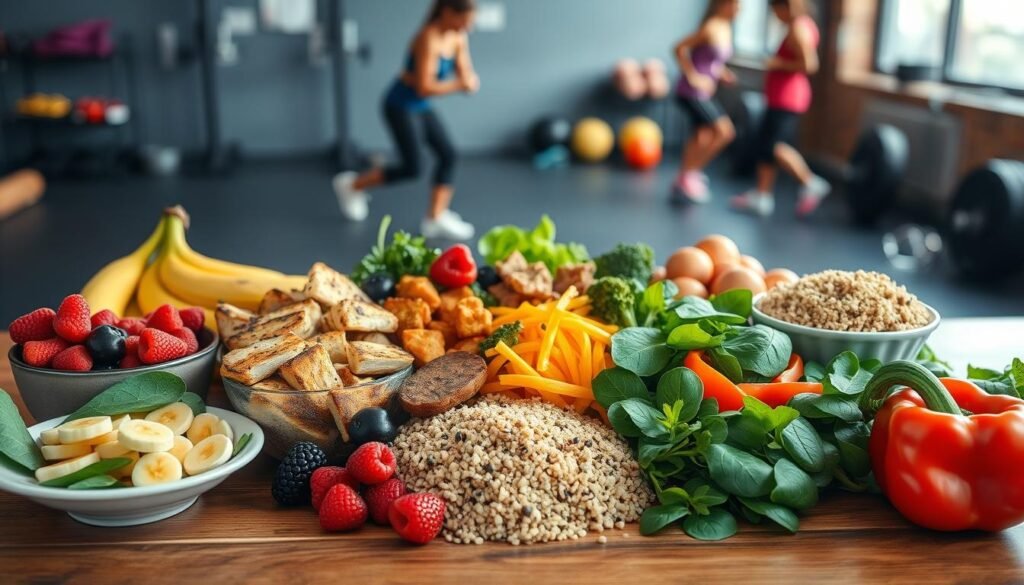
Good nutrition is key to fueling your HIIT workouts and aiding recovery. Eating balanced meals with protein, complex carbs, and healthy fats boosts energy and muscle repair. This is vital for these intense fat-burning routines.
Drinking enough water is essential before, during, and after HIIT. It helps you perform better and avoid getting tired. Try eating snacks like fruit or nuts before working out to get a quick energy boost.
After your workout, eat a meal with protein and carbs. This helps refill glycogen and repair muscles, getting you ready for the next HIIT session. Good choices include lean proteins like chicken or fish with whole grains and veggies.
| Nutrient | Recommended Intake for HIIT | Benefits |
|---|---|---|
| Carbohydrates | Periodized approach, with low and high carb availability | Enhances training adaptations, replenishes glycogen stores |
| Protein | 1.7-1.8 g/kg of body weight per day | Supports muscle building and metabolic machinery |
| Creatine | Supplementation can improve high-intensity performance | Enhances total work, average/peak power, and sprint performance |
| Caffeine | 3-5 mg/kg of body weight | Boosts exercise performance |
| Sodium Bicarbonate | Supplementation can improve 1-10 minute exercise performance | Enhances buffering capacity during high-intensity exercise |
| Beta-Alanine | 3-6 g/day for 28 days | Increases intramuscular carnosine levels, improving endurance and sprint training |
By following these nutrition tips, you can fuel your body for top performance in HIIT workouts. This also helps with recovery, boosting the fat-burning and heart health benefits of your training.
Common HIIT Mistakes to Avoid
High-intensity interval training (HIIT) can be tough if you make common mistakes. One big mistake is overtraining. It can make you feel burnt out and hurt your performance. Stick to 3-4 HIIT sessions a week, with a day off in between to recover.
Not giving your body enough rest between HIIT sessions is another error. Warming up and cooling down are key. They help get you ready for the workout and help your muscles recover. Personal trainer Jill McKay says skipping these breaks can lead to burnout or injury. So, listen to your body and adjust the intensity to avoid overdoing it.
Keeping the right form during HIIT is also vital to avoid injuries and get the most out of your workouts. Trainer Meghan Kennihan advises starting with basic fitness before moving to HIIT. This ensures you learn the right techniques for safe and effective workouts. By avoiding these mistakes, your HIIT sessions can help you reach your fitness and performance goals.