
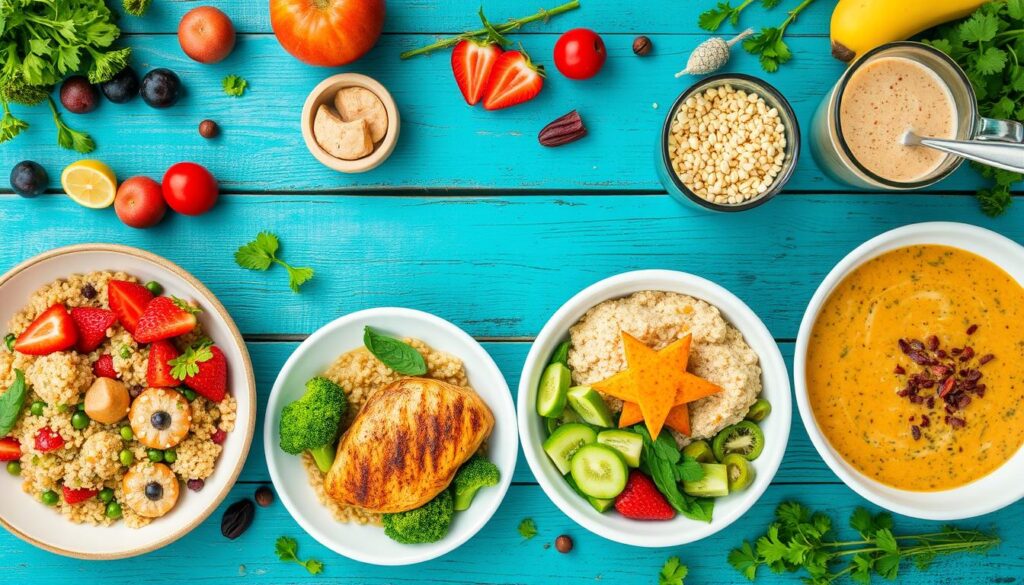

When I step on the scale, the numbers shock me. It’s time to take charge of my health. The weight gain has made me feel slow and out of touch with my body. Today, I’m ready to make a change for my health, not just the scale.
This 7-day meal plan is my ticket to a healthier life. It’s based on science and teaches me about a balanced diet for lasting weight loss. I’ll learn to plan meals, control portions, and snack wisely. This will help me regain my energy and confidence.
The journey won’t be simple, but I’m armed with the right tools and advice. This plan will show me the value of exercise, staying hydrated, and tracking my progress. I’m excited to start this journey, step by step, and become stronger, healthier, and more connected to my body.
Key Takeaways
- Discover a science-backed 7-day weight loss meal plan
- Learn strategies for effective meal planning and portion control
- Understand the role of exercise, hydration, and progress tracking
- Develop sustainable eating habits for long-term weight management
- Achieve your weight loss goals while prioritizing overall health

Understanding the Science Behind Weight Loss
Weight loss isn’t just about eating less. It’s about understanding caloric deficit, macronutrients, and metabolic factors. These are key to managing weight effectively.
Caloric Deficit Explained
To lose weight, you must burn more calories than you eat. This caloric deficit makes your body use fat for energy. Losing 1-2 pounds a week is a healthy pace.
Role of Macronutrients
Protein, carbs, and fats are vital for weight control. Protein helps keep muscle while losing weight. Carbs should be complex and in moderation. Fats are important but should be unsaturated and in the right amounts.
Metabolic Factors
Your metabolism turns food into energy. Factors like age and muscle mass affect it. A balanced diet and exercise can boost your metabolism and help you lose weight.
| Dietary Approach | Average Weight Loss | Impact on Metabolism |
|---|---|---|
| Vegan Diet | Lower BMI compared to omnivorous and pescatarian diets | Potential to boost metabolism and fat burning |
| Vegetarian Diet | Effective for weight loss | Promotes a healthy metabolism boost |
| Diabetes Meal Plan | Effective for weight loss with exercise and portion control | Helps manage blood sugar levels and supports a healthy metabolism |
| Heart-Healthy Diets (DASH, Mediterranean) | Effective for weight loss and cardiovascular health | Supports a balanced metabolism and reduces disease risk |
“A calorie-controlled diet, combined with regular physical activity, is the most effective way to achieve sustainable weight loss and improve overall health.”
Essential Kitchen Preparation and Grocery List
To start your weight loss journey, you need the right tools and ingredients. First, stock your kitchen with must-have items. Get a good food processor or blender for smoothies and veggie purees. Also, sharp knives for chopping, airtight containers for meal freshness, a digital food scale for portion control, and a slow cooker or Instant Pot for easy cooking.
Then, make a healthy grocery list for your 7-day meal plan. Include lean proteins like chicken, fish, eggs, and Greek yogurt. Add complex carbs like whole grains, beans, and lentils. And don’t forget fresh, fiber-rich produce. Include heart-healthy fats from avocados, nuts, seeds, and olive oil. With these ingredients, you’re set for a clean eating journey.
| Protein | Carbs | Healthy Fats | Produce |
|---|---|---|---|
| Chicken breast | Brown rice | Avocado | Broccoli |
| Salmon | Quinoa | Olive oil | Spinach |
| Eggs | Oats | Almonds | Sweet potatoes |
| Greek yogurt | Beans | Chia seeds | Berries |
With your kitchen ready and your list made, you’re on your way to making healthy meals. Meal prep is key to success. Plan ahead for a week of clean eating and weight loss.
7-Day Weight Loss Meal Plan
Reaching your weight loss goals needs a good meal plan. Our 7-day plan helps you lose weight while keeping you healthy. It focuses on counting calories, controlling portions, and managing weight.
Daily Calorie Distribution
The calorie breakdown for this meal plan is as follows:
- Average daily calorie intake: 1,500 calories
- Carbohydrates: 30% of total daily calories (approximately 113 grams)
- Protein: 26% of total daily calories (approximately 98 grams)
- Fat: 44% of total daily calories
Meal Timing Strategies
This meal plan uses a smart timing approach for weight loss and better nutrition:
- Start your day with a balanced breakfast to fuel your body and kickstart your metabolism.
- Enjoy a midday lunch that provides sustained energy and satisfaction.
- Have a light and nourishing dinner to avoid overconsumption before bedtime.
- Incorporate healthy snacks between meals to maintain steady blood sugar levels.
Portion Control Guidelines
Controlling portions is key for weight loss. Follow these tips for the right serving sizes:
- Fill half your plate with non-starchy vegetables.
- Allocate a quarter of your plate for lean protein sources.
- Reserve the remaining quarter for complex carbohydrates.
- Use smaller plates and bowls to naturally consume smaller portions.
- Be mindful of serving sizes for snacks and pre-packaged foods.
- Drink a glass of water before meals to help you feel fuller and eat less.
By following these meal timing and portion control tips, you’ll be on your way to reaching your weight loss goals with our 7-day meal plan.
Smart Protein Choices for Weight Management
Choosing the right protein sources is key to reaching your weight loss goals. Lean protein helps keep your muscles strong and keeps you full. Adding these smart protein choices to your 7-day weight loss meal plan can change your fitness nutrition and clean eating game.
Begin your day with Greek yogurt, rich in protein and probiotics for gut health. Chicken breasts and turkey breast are great lean proteins for grilling, baking, or adding to salads and wraps. For heart-healthy fats, include salmon or other fatty fish a few times a week.
- Lean ground turkey is versatile for tacos, meatballs, or burgers.
- Lentils and legumes are high in nutrients and fiber, perfect for plant-based protein.
- Add eggs to your meals for a protein-rich and convenient option.
By picking these lean protein options, you support your weight loss and fuel your body with vital nutrients. This ensures you’re getting the best for your fitness nutrition and clean eating.
The Power of Nutrient-Dense Vegetables
Incorporating nutrient-dense vegetables into your meals can change the game for weight loss. These low-calorie foods are full of vitamins and minerals. They also have lots of fiber, which keeps you feeling full and happy.
Best Vegetables for Weight Loss
Make sure to include broccoli, spinach, kale, Brussels sprouts, cauliflower, zucchini, and bell peppers in your diet. These foods are rich in nutrients but low in calories. They’re great for a clean eating plan to lose weight.
Preparation Methods
Choose healthy cooking methods like grilling, roasting, steaming, and baking for your veggies. Stay away from frying or using too much oil, butter, or heavy sauces. This can add a lot of calories and hurt your weight loss goals.
Vegetable Combinations
- Mexican Cabbage Soup: Onion, carrot, celery, peppers, and cabbage come together in this fiber-rich soup with black beans.
- Falafel Salad with Lemon-Tahini Dressing: Fiber-packed chickpeas and a variety of colorful vegetables create a nutrient-dense meal.
- Creamy Fettuccine with Brussels Sprouts & Mushrooms: Cruciferous Brussels sprouts and vitamin D-rich mushrooms add a nutritional boost to this pasta dish.
- Cauliflower & Kale Frittata: Cauliflower replaces traditional potatoes, and kale provides cancer-fighting properties.
- African Sweet Potato & Chicken Stew: Sweet potatoes and tomatoes combine to create a nutrient-dense stew served over whole-wheat couscous.
Adding a variety of nutrient-dense foods to your meals is essential for a healthy weight. The fiber, vitamins, and minerals in these veggies make you feel full and happy. Their antioxidants also fight inflammation and oxidative stress.
Strategic Carbohydrate Planning
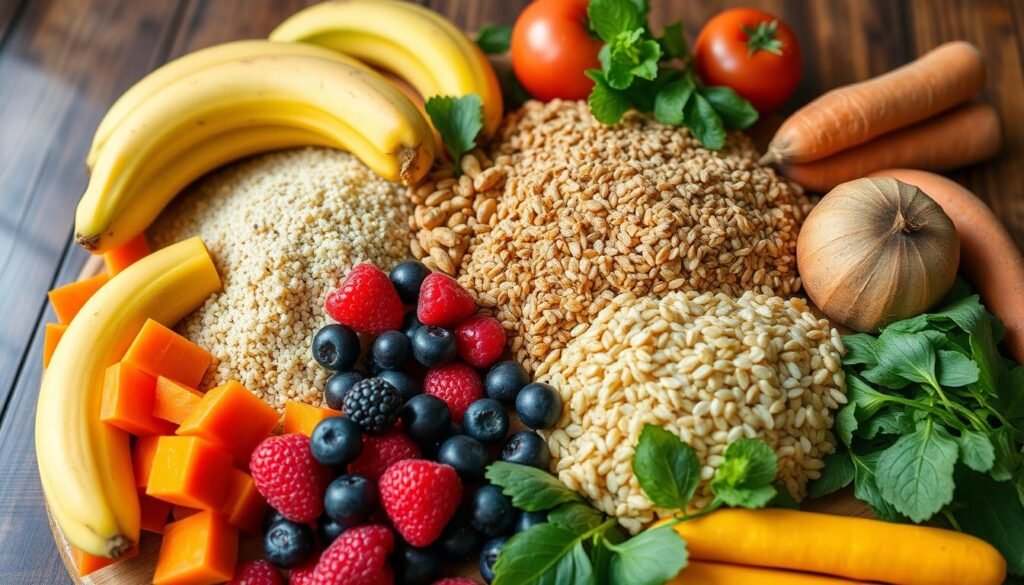
Managing your weight starts with smart carb choices. Eat complex carbs like whole grains, sweet potatoes, and legumes. They digest slowly, giving you steady energy and keeping you full.
Try carb cycling for better results. Alternate between high-carb and low-carb days. High-carb days help refill glycogen stores and boost energy. Low-carb days support fat loss and control blood sugar.
Add low-glycemic foods like berries and chia seeds to your diet. They’re full of nutrients, help control hunger, and keep energy stable. This makes it easier to reach your weight goals.
| Macronutrient | High-Carb Day | Low-Carb Day |
|---|---|---|
| Protein | 156 grams | 156 grams |
| Carbohydrates | 243 grams | 105 grams |
| Fat | 58 grams | 58 grams |
| Total Calories | 2,052 | 2,052 |
Smart carb planning helps with weight management. It gives your body the fuel it needs to work well.
“Carbohydrates are not the enemy; it’s the type and amount of carbs you consume that matter for weight loss.”
Hydration and Its Impact on Weight Loss
Drinking enough water is key to losing weight. Studies show that staying hydrated helps with weight loss and health. It affects how your body burns calories, controls hunger, and performs during workouts.
Daily Water Requirements
Women should drink about 9 cups (2.2 liters) of water a day. Men need around 13 cups (3 liters). This includes water from drinks and food. Drinking enough water helps your body work right and aids in losing weight.
Hydration Schedule Tips
- Start your day with a glass of water upon waking up.
- Carry a reusable water bottle with you and sip on it throughout the day.
- Set reminders to drink water every two to three hours to stay consistent.
- Drink a glass of water before each meal to help curb appetite and reduce calorie intake.
Hydration-Boosting Foods
You can also get more water by eating foods that are high in water. Good choices include:
- Fruits: Watermelon, oranges, grapefruits, and berries
- Vegetables: Cucumbers, tomatoes, lettuce, and bell peppers
- Soups and broths: Opt for low-sodium and vegetable-based options
Eating these foods can help with weight loss. They also add nutrients and fiber to your diet.
Drinking enough water is a simple way to help with weight loss. By drinking the right amount and eating hydrating foods, you can boost your metabolism, control hunger, and improve your health.
Exercise Integration for Maximum Results
Unlocking your fitness nutrition plan’s full power starts with smart exercise choices. Mix cardio and strength training to boost your fat burning and metabolism.
Make sure to do at least 150 minutes of moderate cardio each week. You can jog, cycle, or walk briskly to raise your heart rate and burn calories.
Also, do 2-3 strength training sessions weekly, focusing on big muscles. This builds lean muscle, which helps you burn more calories even when you’re not moving.
Don’t forget to rest and recover. This is key to avoiding burnout and injury. Pay attention to your body and adjust your workouts as needed for steady progress.
“Integrating the right balance of cardio and strength training is the key to unlocking maximum weight loss results.”
By sticking to this plan, you’ll be on track to meet your fitness nutrition, fat burning, and metabolism boost goals. Stay consistent, listen to your body, and watch the results grow.
Meal Prep Strategies and Time-Saving Tips
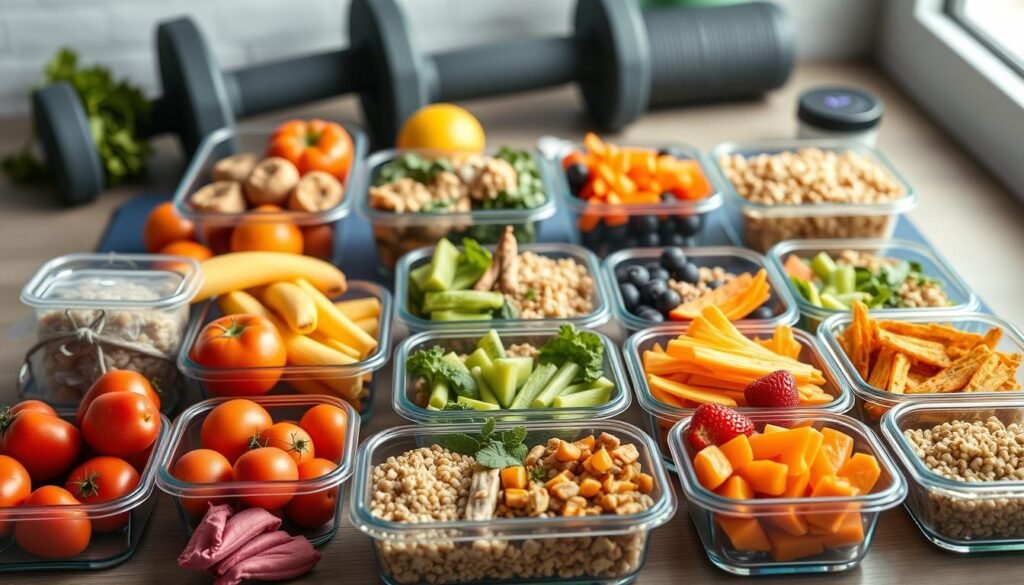
Meal prep can change your life for the better. It helps with weight management and clean eating. By spending a bit of time upfront, you can have healthy meals ready all week.
Batch Cooking Basics
Batch cooking is a key part of meal prep. Spend a few hours on the weekend cooking lean proteins like chicken or salmon. Also, make a big batch of whole grains like quinoa or brown rice. Add fresh veggies to your meals for the week.
Storage Solutions
Keeping your meals fresh is important. Use good, airtight containers for storage. Label and date each container so you know what’s inside and when it was made.
Weekly Prep Schedule
- Plan your meals and make a shopping list.
- Use a few hours on the weekend for batch cooking.
- Prepare meals in individual servings for easy access.
- Have healthy snacks ready, like fruit or nuts.
- Follow your prep schedule to avoid unhealthy choices.
Mastering meal prep helps with weight management and clean eating. With planning and prep, you save time, reduce stress, and eat well.
| Benefits of Meal Prepping | Percentage of Impact |
|---|---|
| Improved Meal Planning Skills | 85% |
| Increased Daily Water Intake | 65% |
| Weight Loss or Maintenance | 78% |
| Reduced Stress Levels | 75% |
“Meal prep has been a game-changer for my weight management and overall health. It takes a bit of upfront effort, but the convenience and peace of mind it provides throughout the week are invaluable.”
Creating Sustainable Eating Habits
Starting a clean eating lifestyle is more than a 7-day weight management plan. Keep planning your meals and following a routine. This helps avoid unhealthy fitness nutrition snacks and keeps you focused on your goals.
Set goals for losing weight that you can reach. Losing 1-2 pounds a week is good for keeping the weight off long-term. Eat foods that are full of nutrients and avoid processed foods, sugary drinks, and unhealthy fats.
- A 2022 Gallup Poll found 55% of Americans want to lose weight.
- The CDC says healthy eating, exercise, and managing stress are key for losing weight.
- Slow weight loss is better for keeping the weight off.
Get support from friends, family, or health experts to stay motivated. Having people who support your clean eating journey helps a lot in keeping up with weight management habits.
“The key to successful long-term weight loss is making gradual, sustainable changes to your diet and lifestyle.”
The 7-Day Weight Loss Meal Plan is just a starting point, not a must-follow rule. Pay attention to your hunger and adjust your diet as needed. This way, you meet your fitness nutrition needs while working towards your goals.
Tracking Progress and Adjusting Your Plan
It’s important to keep an eye on your progress for weight management and fitness nutrition goals. Weigh yourself and take measurements to see how your body changes. But remember, the scale number isn’t everything.
Pay attention to how you feel and the healthy habits you’ve built. These are key signs of success, not just the scale.
Think about any challenges you’ve faced and what helped you stay on track. Use this to set new goals, like trying new exercises or eating more whole foods. Celebrate every small win and keep moving forward.
Be ready to change your plan if needed. Your body and life can change, so adjust your approach to keep moving forward. Stay committed and patient, and you’ll reach your goals.



It’s actually a cool and helpful piece of info. I’m glad that you just shared this helpful info with us. Please keep us informed like this. Thank you for sharing.
Hey very cool blog!! Man .. Beautiful .. Amazing .. I’ll bookmark your website and take the feeds alsoKI am glad to find numerous useful info right here in the publish, we’d like work out extra techniques on this regard, thank you for sharing. . . . . .
I like this blog its a master peace ! Glad I discovered this on google .
I like this site; it’s a masterpiece! Glad I found this on Google.
I’ve been absent for some time, but now I remember why I used to love this website. Thank you, I will try and check back more frequently. How frequently you update your site?
I take pleasure in, result in I found exactly what I used to be looking for. You have ended my 4 day long hunt! God Bless you man. Have a nice day. Bye